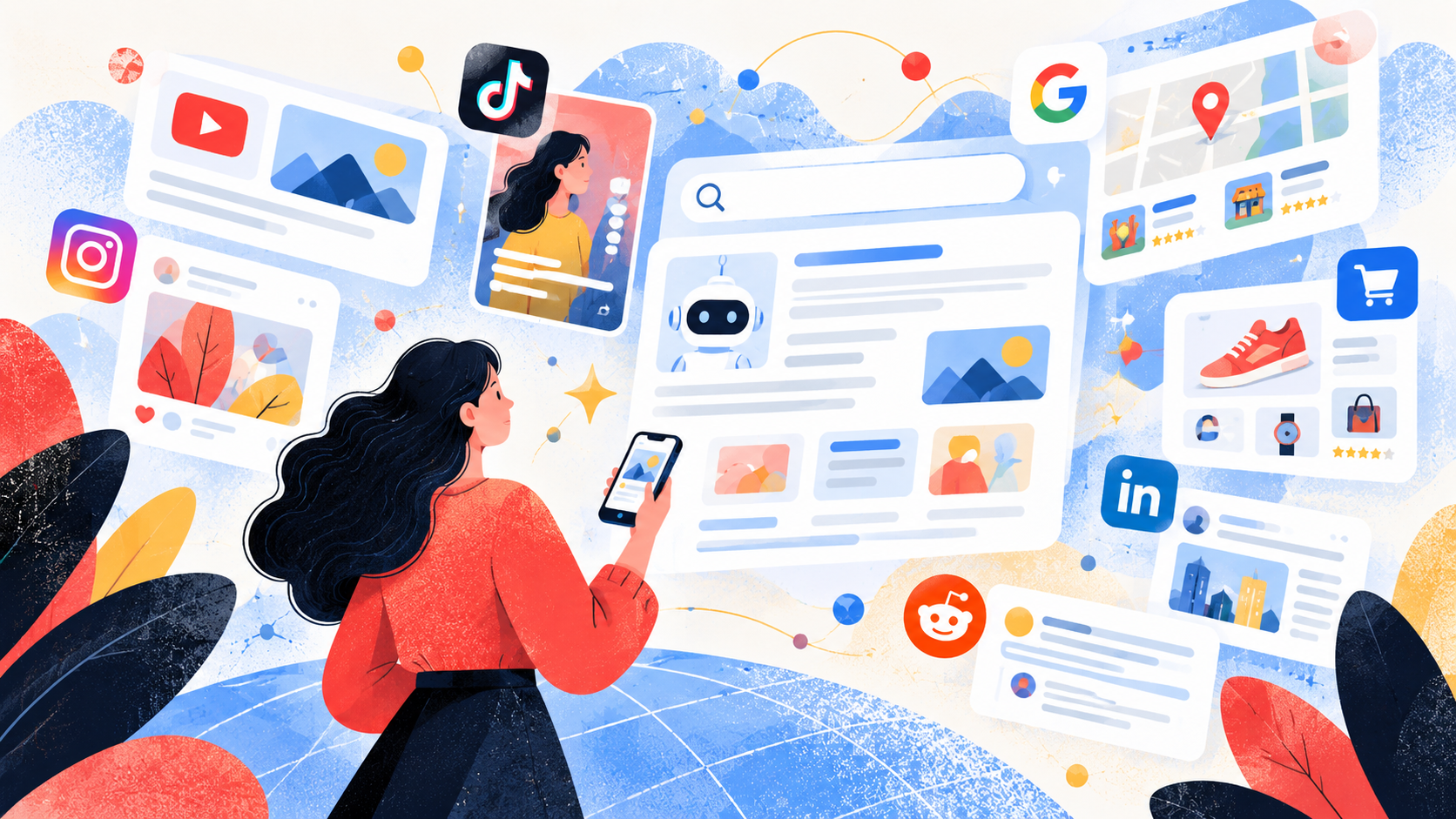
For years, digital marketing revolved around one measurable action: the click. Search ads wanted a click. Organic listings wanted a click. Social posts wanted a click. Emails wanted a click. That model made reporting easier because traffic was visible inside analytics platforms.
In 2026, more customer journeys happen without an immediate website visit. People read AI-generated summaries, consume LinkedIn posts, watch short videos, compare businesses in Google Maps, read reviews, and ask conversational systems to shortlist options. The customer may learn a great deal about a brand before ever opening its website.
Zero-Click Does Not Mean Zero Value
A marketing activity can create value even when it does not produce a direct visit. Imagine a decision-maker who sees several of your LinkedIn posts, later watches one of your videos, hears your company mentioned by a colleague, and finally searches your brand name directly. Traditional analytics may attribute the final visit to branded organic search, but the demand was created earlier.
This is one reason marketers should avoid treating clicks as the only evidence that content works.
Optimize for Memory, Not Only for Traffic
A strong zero-click post should provide enough value to be useful inside the platform where it appears. If every post says “Click the link to learn the secret,” audiences quickly lose interest. Instead, explain the idea, show the example, and then offer the next step for readers who want deeper help.
This approach builds familiarity. A person may not be ready to buy today, but if the content is useful and recognizable, the brand becomes easier to remember when the need becomes urgent.
Develop a Distinct Point of View
Brands become memorable when they repeatedly communicate a clear perspective. A marketing consultant might consistently argue that lead quality matters more than lead volume. A video agency might focus on the idea that production value should support the message rather than replace it. A research consultant might emphasize that publication is only the beginning of academic visibility.
These ideas create association. Over time, the market begins to connect a particular problem or viewpoint with the brand.
Measure the Signals Around Demand
Zero-click marketing requires a broader measurement mindset. Depending on the business, useful signals may include:
- Branded search growth.
- Direct website traffic.
- Profile views from relevant decision-makers.
- Video completion and repeat viewers.
- Content saves and shares.
- Newsletter subscriptions.
- Qualified inbound inquiries.
- Assisted conversions.
No single metric proves success. The objective is to look for a pattern showing that the market is becoming more familiar with the brand.
Your Website Still Plays a Critical Role
Zero-click marketing does not make websites unnecessary. The website often becomes the place where trust is confirmed. Someone may discover you on social media and visit the site later to check services, experience, publications, case studies, or contact information.
This means the website needs to support evaluation. It should explain the company clearly, provide evidence, answer objections, and make the next step easy.
Create Content Native to Each Channel
The core idea can be reused, but the presentation should fit the environment. A detailed article may become a short LinkedIn insight, a 45-second video, a newsletter section, and a short visual carousel. Repurposing should preserve the idea while adapting the format.
Copying the same caption and media file everywhere is not a strategy. Different platforms reward different behaviors.
The Customer Journey Is Larger Than Your Dashboard
People move between channels, ask colleagues, watch silently, return days later, and compare without leaving obvious traces. Marketing has always been more complex than attribution software suggests; AI and zero-click discovery simply make that reality harder to ignore.
The brands that win will be the brands useful enough to be remembered, even when the first interaction never produced a click.
Muhammad Al Ori
Business Development and Marketing Strategy